
Building Better Founders
A Farley course explores how personality science can unlock hidden leadership potential
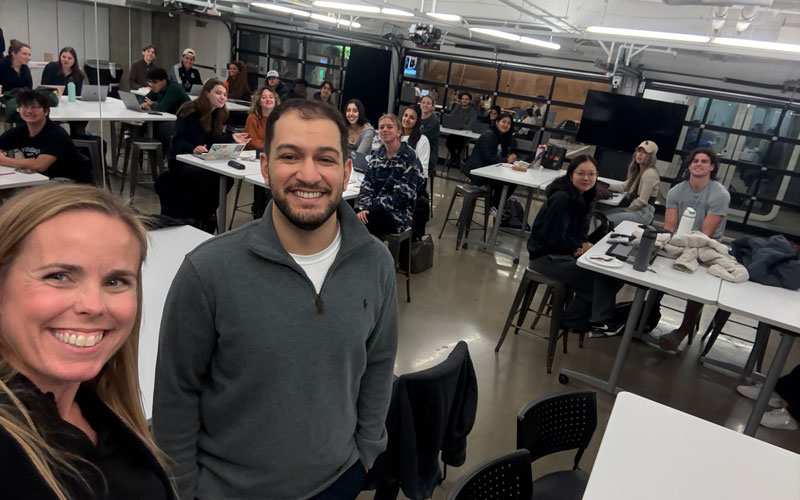
What makes someone a great entrepreneur? Fearlessness? Confidence? Creativity? Professor Jennifer Tackett wants students to forget the “born entrepreneur” myth entirely.
This quarter at the Farley Center for Entrepreneurship and Innovation, Tackett brought her background as a personality psychologist and researcher to “ENTREP 395: The Psychology of Entrepreneurial Leaders,” a scientifically grounded course that teaches students to uncover their strengths, understand their blind spots, and build leadership strategies rooted in who they are, not who they think they’re supposed to be.
An interdisciplinary dialogue
Tackett has spent her career researching leadership, including seven years working closely with student founders at The Garage. In that time, she noticed a gap: entrepreneurship students rarely encountered psychological science, and psychology students rarely saw how their discipline could apply beyond clinical work.
“The course was driven out of a desire to create dialogue between these two groups,” Tackett said. “Entrepreneurship thrives when people who speak different languages and have different backgrounds come together.”
The course, which is cross listed in Northwestern's course catalogue for Psychology and Entrepreneurship, intentionally brings students from those disciplines together. Class projects are tackled in teams of students from varying majors and schools, creating a built-in exchange of perspectives. In this quarter’s class, students from journalism, engineering, neuroscience, economics, and more mixed ideas.
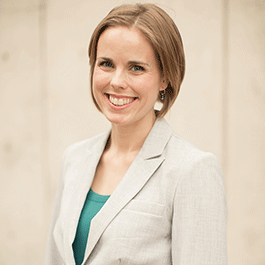 Tackett’s ability to facilitate this cross-disciplinary conversation comes from a depth of expertise in how people develop, lead, and make decisions. A clinical psychologist and director of Northwestern’s Personality Across Development Lab, she studies how traits like risk-taking and self-control develop, and how they shape behavior, decision-making, and leadership.
“My goal is to help people thrive by better appreciating their unique self,” Tackett said.
Science backed tools for self-aware leaders
At the core of the course is personality science. Students take multiple personality and values assessments, then build a leadership portfolio that analyzes their results through the lens of scientific research. Rather than prescribing a single ideal leadership style, the course guides students to examine their natural strengths and weaknesses and create strategies to support their unique self in an entrepreneurial context.
Tackett emphasizes that there are no “good” or “bad” traits. The ability to take risks, for example, can fuel innovation – but without grounding personalities on a team, it can lead to overreach. Similarly, risk-averse students may not fit the stereotypical founder profile, but they bring crucial stability and strategic thinking to a highly uncertain environment.
“Personality change is not a strategy,” Tackett said. “What matters is awareness of what you have control over. If I know my own personality traits, I can then assess who I decide to cofound with, who my mentors are, and how I draw on other personalities and energies to succeed.”
A course that evolves with students
Tackett describes the class – now in its second run at Farley - as a “source of joy” and one that will continue evolving.
“It’s a living course,” she said. “It’s built on a structured scientific foundation, but it’s designed to meet every student where they are at the moment. That means it’s always going to change and reflect the world around us and the students in it.”